INTERFAITH, INTERRACIAL, INTERCULTURAL PRAYER FOR PEACE -Ambassador Zara Bayla Juan

INTERFAITH, INTERRACIAL, INTERCULTURAL PRAYER FOR PEACE -Ambassador Zara Bayla Juan
PEACE VIGIL PRAYERS FOR UN INTERNATIONAL DAY OF PEACE 12:00 NOON IN YOUR TIME ZONE

Translate

PRAY FOR PEACE

Monday, October 14, 2019

PRAY FOR AFRICA as spread of terrorist networks is growing across African national borders, with a pervasive climate crisis exacerbating violence, and leading to resource shortages

At a press briefing in Geneva, spokesperson Andrew Mbogori said that some 486,000 have been forced to flee within the country, 267,000 of whom in the past 3 months alone.

The spokesperson mentioned reports of more than 500 being killed in 472 attacks and counter-military operations since 2018, and of the severe effects that the attacks and insecurity have had on basic services such as health care and education, as well as freedom of movement. “Malnutrition and starvation are a real threat”, said Mr. Mbogori. “We need urgent resources to launch a coordinated humanitarian response – an immediate necessity to save lives”.

During a Security Council meeting on peace in Africa, held on Monday, the UN Secretary-General declared that the spread of terrorist networks is a growing threat across African national borders, with a pervasive climate crisis exacerbating violence, and leading to resource shortages.

In Saturday’s statement, Mr. Guterres expressed his deep condolences to the families of the deceased, and the people and the Government of Burkina Faso, and wished a speedy recovery to the injured. He went on to reiterate the commitment of the United Nations to work with Burkina Faso to promote social cohesion, and ensure the country stays on the path towards sustainable development.

13 October 2019
Peace and Security


UN chief António Guterres has strongly condemned Friday’s attack on a mosque in northern Burkina Faso, in a statement released on Saturday.

At least 15 people were killed, and four injured in the town of Salmossi, which is near the border with Mali. The lives of hundreds of thousands of civilians in the north of the country are disrupted by growing numbers of attacks, and insecurity. On Saturday, some 1,000 people are reported to have protested in the capital, Ouagadougou, denouncing the violence and the presence of foreign military forces in the region.

The deteriorating situation is causing an “unprecedented humanitarian emergency”, the UN refugee agency warned on Friday.


Sunday, October 6, 2019

PRAY FOR MALI as Terrorist Attacks on Military Camps left dozens dead and scores missing


2 October 2019
Peace and Security
The United Nations condemned on Wednesday, with “the utmost energy”, simultaneous terrorist attacks on military camps in central Mali, close to the border with Burkina Faso, that left dozens dead and scores missing.


The incursion against a Malian battalion of the regional G5 Sahel Force in Boulkessi, and also a Malian army base in Mondoro, were reported by the Malian Government on Tuesday.

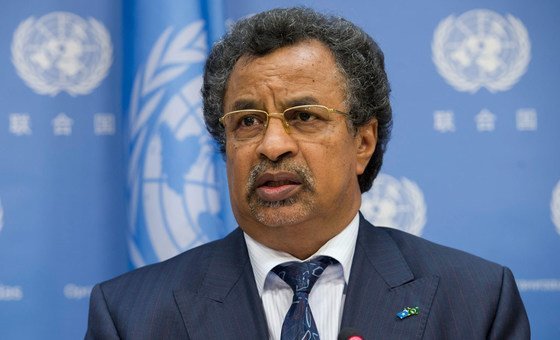
Mahamat Saleh Annadif photographed by UN Photo/Eskinder Debebe

“These acts of terror will not hinder the joint efforts of the Malian Government and its partners for peace and security”, said Mahamat Saleh Annadif, head of the UN Stabilization Mission in Mali, which goes by the French acronym of MINUSMA.

He spelled out that “at a time when the Government of Mali and its friends are pooling their efforts to overcome a security crisis with deleterious effects on the Sahel, these acts from another era cannot undermine our commitment and determination”.

The attacks occurred only a few days after the 74th UN General Assembly where security in Mali and the Sahel was given an important place on the agenda, with several high-level meetings attended by regional Heads of State.

This most recent offensive is the latest act of jihadist violence, as well as inter-communal strife, that began in 2012 when Islamist militants briefly took over the north of the country.

According to news reports, a hunt is under way for the missing troops.

Mr. Annadif reiterated MINUSMA’s strong commitment to carry out its Security Council mandate, making clear that the implementation of the Peace and Reconciliation Agreement and the stabilization of the country’s central region, remain the priority.

The UN will “spare no effort” in supporting the G5-Sahel and the Malian army in their “mission to fight terrorism” he affirmed.

“MINUSMA has provided the G5-Sahel Force (a coalition of Burkina Faso, Chad, Mali, Mauritania, and Niger) with aerial support to strengthen its position in Boulkessi and has evacuated the injured"

MINUSMA also extended its “deepest condolences to the Government of Mali and to the grieving families” and wished “a speedy recovery to the injured”.


Saturday, September 28, 2019

PEACE VIGIL: Children from at least 42 Member States are curren...


Children from at least 42 Member States are currently interned in camps in northern Syrian Arab Republic. Owing to data gaps, including the absence of any data for several States known to have high numbers of foreign terrorist fighters (FTFs), this is likely to be an underestimation of the total number of Member States impacted by this issue

KEY TRENDS • 1 See the latest GRN newsletter for more information. 2 See CTED Analytical Brief: The repatriation of ISIL-associated women. 4 •


Approximately 1,000 children from at least 21 Member States have been repatriated from Iraq or the Syrian Arab Republic since September 2018. Around 75 per cent of those repatriations took place in May and June 2019, but progress appears to have slowed, with few subsequent examples of repatriation from either State. • Several Central Asia States, Azerbaijan and the Russian Federation were responsible for more than 60 per cent of the total repatriations. In most of those cases, mothers were repatriated with their children, although in around 25 per cent of cases, unaccompanied children were repatriated from Iraq (where their mothers remain in prison). • Despite the significant number of children of European origin currently interned in Iraq and the Syrian Arab Republic, the data available to CTED suggests that only seven European Member States have repatriated children since September 2018, predominantly young orphans or unaccompanied children. • Although large numbers of FTFs travelled to Iraq and the Syrian Arab Republic from the Middle East, North Africa and South-East Asia, CTED found limited information on children from those regions currently interned in Iraq and the Syrian Arab Republic or on repatriations to those regions. There was also limited gender disaggregation across all datasets. • In order to fill those data gaps and help develop a more tailored response to this challenge, impacted Member States and relevant international, regional, subregional and civil society organizations should proactively collect (and where appropriate, share) gender-, age- and nationality-disaggregated data on the children who remain interned in Iraq and the Syrian Arab Republic.


RESPONSES Although a significant number of impacted Member States appear to have approached the issue of child repatriation on a case-by-case basis, some policy positions or approaches have emerged. These include: • Repatriation of large groups of children from either Iraq or the Syrian Arab Republic; • Prioritization of the repatriation of orphans or unaccompanied children; • Prioritization of the repatriation of younger children (including by only repatriating children below a defined age limit); • Introduction of measures preventing children born in the conflict zones from automatic entitlement to citizenship, if their parents are suspected of affiliation with ISIL; • Reluctance to take active steps to repatriate children. There have also been differences in the approaches taken by some Member States to the repatriation of children from Iraq and the Syrian Arab Republic, respectively. This appears to be 5 partly due to the different legal status of the entities with which Member States are engaging. Many States have existing bilateral agreements - including on mutual legal assistance - in place with the Government of Iraq. In contrast, several Member States who have publicly expressed their willingness to repatriate children from camps administered by the Syrian Democratic Forces (SDF) have undertaken, or are undertaking, a review and assessment process to understand how they can legally interact with a non-State actor on this issue.


CHALLENGES Thousands of children (most of whom are under the age of 12) remain stranded in overcrowded camps in Iraq and the Syrian Arab Republic, where they have limited access to food, medical care, education and other fundamental rights and services. Although many of the children have been exposed to extreme acts of violence or subjected to human rights violations and abuses, the camps are unable to provide appropriate reintegration and rehabilitation assistance, including access to psychosocial support or post-trauma counselling. States have faced multiple challenges in developing their responses to this urgent, yet complex situation. These include confirming the nationality or nationalities of children (many of whom were born in the conflict zones and therefore lack birth registration and identify documents). Many were also born to a parent or parents with multiple nationalities of their own, while countless others have been orphaned. Confirming their nationality has been further complicated by the policies of some Member States, who have removed citizenship from parents of children or placed restrictions on the entitlement of those children to citizenship, thereby risking leaving the children stateless. The reluctance of some States to engage in the repatriation of children appears to have been driven by security concerns. These include uncertainty regarding the State’s own ability to adequately conduct risk assessments or provide appropriate reintegration and rehabilitation assistance on the children’s return. Some older children may also be above the age of criminal responsibility in their home State and be suspected of terrorism-related offences. Many States have alerted CTED to the broader challenges that they face relating to jurisdiction and evidence, which could potentially hinder their efforts to investigate and prosecute such individuals following their repatriation. Some approaches taken by States – including separating children from their parents for repatriation – have also resulted in domestic legal challenges and expressions of concern by civil society organizations, which have emphasized States’ obligations under international law (including international human rights law, international humanitarian law and international refugee law), particularly Article 3 and Article 9 of the Convention on the Rights of the Child.3 3 A/RES/44/25.


GUIDANCE AND INITIATIVES There is guidance available for Member States, and several initiatives have been launched to raise awareness of the relevant issues and share good practices. The Security Council has adopted a number of related resolutions and issued guidance, most notably: • Security Council resolution 2396 (2017), which recognizes, inter alia, the particular importance of providing, through a whole-of-Government approach, timely and appropriate reintegration and rehabilitation assistance to children associated with FTFs returning or relocating from conflict zones, including through access to health care, psychosocial support and education programmes that contribute to the well-being of children and to sustainable peace and security. The resolution also encourages Member States to develop appropriate legal safeguards to ensure that prosecution, rehabilitation and reintegration (PRR) strategies are in full compliance with their international law obligations, including in cases involving children.4 • The Counter-Terrorism Committee’s Addendum to the guiding principles on foreign terrorist fighters (2018), 5 which includes multiple principles relevant to Member States’ obligations in relation to children. These include, inter alia: o Guiding Principle 7, on legal frameworks and procedures, which calls on Member States to put in place special safeguards and legal protections in cases involving children, in full compliance with their obligations under international law. These include, inter alia, taking into consideration the age of the child and the many roles they may have served, while recognizing that they may be victims of terrorism, and assessing each child individually and without prejudice. o Guiding Principle 12, on PRR strategies, which states that Member States should, inter alia, make the best interests of the child a primary consideration and implement PRR strategies that are: age- and gender-sensitive; in compliance with criminal legislation; include access to health care, psychosocial support and education programmes; and enable the involvement of child-protection actors and the social sector, as well as their effective coordination with the justice sector. Other parts of the United Nations have also developed guidance, including: • In April 2019, the United Nations system developed Key principles for the protection, repatriation, prosecution, rehabilitation and reintegration of women and children with links to United Nations-listed terrorist groups. The Principles aim to enhance the coherence of United Nations activities and assist Member States to design and implement policies and actions in accordance with international law, including international human rights law, international humanitarian law and international refugee law. 4 S/RES/2396 (2017). 5 S/2018/177. 7 • In 2018, the Office of the United Nations High Commissioner for Human Rights (OHCHR) launched the Guidance to States on human rights-compliant responses to the threat posed by foreign fighters.6 This document, which was developed with the support of multiple United Nations entities through the former United Nations Counter-Terrorism Implementation Task Force (including CTED), includes a chapter on children affected by or involved in FTF activities. • In 2017, the United Nations Office on Drugs and Crime (UNODC) produced its Handbook on Children Recruited and Exploited by Terrorist and Violent Extremist Groups: The Role of the Justice System.7 The Handbook includes extensive guidance on the rehabilitation and reintegration of children recruited and exploited by terrorist groups. • In June 2019, UNODC launched its Road map on the Treatment of Children Associated with Terrorist and Violent Extremist Groups. The Road map (which is based on the associated UNODC training package) sets out guidance on key aspects of the preventative, rehabilitative, reintegrative and justice strategies and measures relating to child recruitment and exploitation by terrorist groups.8 • In late September 2019, the United Nations Office of Counter-Terrorism (UNOCT) and the United Nations Counter-Terrorism Centre (UNCCT) will launch their Handbook on Children affected by the Foreign Fighter Phenomenon: Ensuring a Child Rights-Based Approach. The following internationally recognized guidance on this issue is also available: • In September 2018, The Global Counterterrorism Forum (GCTF) adopted a Good Practices document on Addressing the Challenge of Returning Families of FTFs,9 which lists 20 good practices identified during a series of regional workshops. These include four good practices specifically focused on children, emphasizing: o Prioritization of the child’s best interests; o Respect for international law and juvenile-justice standards; o Consideration of diversion mechanisms and alternatives to incarceration when prosecuting children; o Approaching rehabilitation and reintegration programming through a lens of socialization and education that promotes disengagement from violence and prosocial behaviour. 6 The full guidance is available on the OHCHR website. 7 The Handbook is available on the UNODC website. 8 See the UNODC website for more information. 9 The full Good Practices document is available on the GCTF website.PEACE VIGIL: Children from at least 42 Member States are curren...: KEY TRENDS • 1 See the latest GRN newsletter for more information. 2 See CTED Analytical Brief: The repatriation of ISIL-associated wo...

Friday, September 6, 2019

PRAY FOR IDLIB as Millions of children, women and civilians ‘counting on your support to make the violence stop’

Peace and Security
Despite an agreement signed nearly a year ago on a halt to further escalation in Syria’s war-battered Idlib, “the bombing and fighting go on in plain sight, day in and day out”, the UN humanitarian chief told the Security Council.


Noting that he has briefed “many times over the last few months”, Mark Lowcock, the UN Emergency Relief Coordinator, said that “three million people – two-thirds of them women and children – are counting on your support to make this violence stop”.

According to “conservative estimates” in the Secretary-General’s latest report, he revealed that “more than 500 civilians had been killed and many hundreds more injured” in northwest Syria since late April.


Most recently, 44 civilians were killed by airstrikes between 16 and 18 August, 15 others on Monday and 17 more just yesterday.

“Over the last three weeks, since the collapse of the conditional ceasefire on 5 August, dozens of communities have emptied out in northern Hamaand southern Idlib”, he stated.

“Satellite imagery shows that entire towns and villages have been razed to the ground,” he said, adding that many fled northwards closer to the Turkish border and those who stayed behind “are cowering in basements or in what’s left of their homes”.

And yet, despite the many challenges, “the humanitarian community is doing everything it can to respond to the needs” of the people in and around Idlib, Mr. Lowcock said, elaborating that some 15,000 aid workers continue to provide shelter materials, food assistance and health services, including for newly displaced people.

More than a million people who receive general food assistance every month are reached exclusively through a cross-border operation because “access from within the country is impeded,” the UN Humanitarian Coordinator stated.
Dire conditions drive people out of Rukban

Turning to Rukban, Mr. Lowcock said dire conditions and lack of assistance, coupled with the hope for durable solutions, have led many people to leave.

And per a UN agreement with the Syrian authorities, a mission is planned to help those who wish to leave find for shelters in Homs.


Satellite imagery shows that entire towns and villages have been razed to the ground – UN Humanitarian Coordinator

“All movement must be voluntary, safe, well-informed and dignified, with humanitarian access assured throughout”, assured Mr. Lowcock.

In Al Hol, “there are currently some 68,600 people in the camp”, living in extremely difficult conditions, he informed. “Most have been exposed to violence and trauma under ISIL”.

He mentioned that the United States and Turkey plan to coordinate a so-named “safe zone” in the country’s north-east, for which the UN is not a party, and emphasized that the welfare of civilians must be insured, including by guaranteeing “unimpeded and safe humanitarian access to civilians in need”.

“The UN and humanitarian agencies run a large relief operation all across Syria, reaching six million people”, including humanitarian assistance, he stated, however, with “significantly less” funding this year, he asked those who pledged at the Brussels conference in April “to take early action to implement them”.

Acknowledging that “we cannot turn back the clock on what has happened”, Mr. Lowcock underlined that “this Council and its members can take meaningful action now to protect civilians and ensure full respect for international humanitarian law.

“It is within your power to do that”, he concluded.
‘Alarming’ scale of violence

For his part, Geir Pedersen, UN Special Envoy for Syria, flagged that the scale of violence and instability in Syria is “extremely alarming”.


He painted a grim picture of rising civilian death tolls; millions displaced; untold tens of thousands detained or missing; large territories fragmented between different actors; and ISIL terrorists stepping up guerrilla attacks, saying “and not yet the launch of a real political process”.

“These dynamics can and must change”, he stressed as he highlighted five of the current dangers beginning with resumed hostilities in and around Idlib, in the country’s north-west, where three million civilian lives are at risk.

He next turned to Syria’s north-east, where tensions flared in July with troop concentrations on the Turkish side of the border.

Thirdly, he spoke about Israeli-Iranian tensions that are putting the country in the crosshairs by planning drone attacks from Syrian soil.

Turning to the country’s south-west, he warned of reports of detentions, demonstrations, disappearances and assassinations.

“There is no military solution for Syria”, Mr. Pedersen underscored. “Only a political process and ultimately a political solution can restore Syria’s sovereignty, protect the rights and future of all Syrians, and begin to address the deep divisions within Syrian society”.


There is no military solution for Syria – UN Special Envoy
Constitutional committee

Amid surging violence and lagging political progress, he spoke of a constitutional committee in Geneva, maintaining that “to be a meaningful door opener…that turns the page towards a new Syria” it should be “accompanied by measures that have real impact on the ground”, pointing to “real action on detainees, abductees and missing persons” as being “such a measure”.

According to the UN envoy, “international players have the responsibility to deepen their dialogue too” and support the UN “as we work directly with the Syrian parties.”

“If the Syrians are to overcome their mistrust and division, and move step-by-step along a path to heal Syrian society and restore Syria’s place in the international community, a common international support format for Geneva will be absolutely key”, he stressed.

In closing, he asked for Council’s support “in making this happen”.

Wednesday, August 28, 2019

PRAY FOR WEST & CENTRAL AFRICA as Schools being Shut down robbing students of their education in Burkina Faso, Cameroon, Chad, Central African Republic, the Democratic Republic of the Congo, Mali, Niger and Nigeria


23 August 2019
Culture and Education

Data gathered by UNICEF to June indicates that 9,272 schools have been closed in Burkina Faso, Cameroon, Chad, Central African Republic, the Democratic Republic of the Congo, Mali, Niger and Nigeria as a result of insecurity - three times the number at the end of 2017. 

“Schools are being shut down,” according to UNICEF Deputy Executive Director, Charlotte Petri Gornitzka. “Over the past two years, the number of schools that have been shut down has tripled; over 9,000 schools due to the insecurity have been attacked.”

The UNICEF report notes how spreading insecurity across north-west and south-west Cameroon has left more than 4,400 schools forcibly closed.

In Burkina Faso, more than 2,000 schools are closed, along with more than 900 in Mali, owing to increasing violence in both countries.

In the central Sahel region, moreover, Burkina Faso, Mali and Niger have witnessed a six-fold increase in school closures owing to attacks and threats of violence in just over two years, from 512 in April 2017, to more than 3,000 by June this year.

School closures in the four countries affected by crisis in the Lake Chad Basin – Cameroon, Chad, Niger and Nigeria – remained at around 1,000 between the end of 2017 and June 2019. 


A surge in “deliberate” attacks against students, teachers and schools in West and Central Africa has led to a tripling in school closures in the last year and left almost two million youngsters “robbed of an education”, the UN Children’s Fund (UNICEF) said on Friday.


In a new report detailing threats of violence against schools across the region and issues as a ‘Child Alert’, the UN agency warned that a generation of children risks being denied the right to learn.

“Nearly two million children are out of school due to conflict, so it is not an easy number,” UNICEF Goodwill Ambassador, Muzoon Almellehan, told journalists in Geneva. “It is important to highlight those challenges, to highlight the struggle of those people. They need us, they need our attention.”

From Burkina Faso to Nigeria, more than 9,200 schools shut


Education is crucial when you’ve fled violence – UNICEF Goodwill Ambassador

Just back from visiting a camp for people displaced by violence in central Mali, Ms. Almellehan insisted in Geneva that for many people, herself included, education was vitally important in giving children hope for a better future.

“I had to flee my homeland in Syria in 2013 and I also had to live in refugee camps,” she explained. “It wasn’t easy for me and also I can feel like those children who can’t go to school, because education is something really, really important to me, myself.”

One direct result of children not getting an education is that they are more vulnerable to recruitment by extremists or abuse at their hands such as forced marriage, the UNICEF Goodwill Ambassador insisted.

“When a child is not at a school, especially if the child suffers from a very bad economic situation, when they are in poverty, when they don’t have enough awareness, all of that can affect that child and can lead that child to being exploited easily,” she said.

On a wider level, the lack of schooling “is casting a foreboding shadow upon children”, their families, their communities and society at large,” UNICEF said in a statement, noting that more than 40 million six to 14-year-olds are already missing out on school in Central and West Africa.

The agency is working with education authorities and communities to support alternative learning opportunities including community learning centres, radio school programmes, technology for teaching and learning, and faith-based learning initiatives.

It is also providing tools for teachers who work in dangerous locations, and psychosocial support and care for schoolchildren emotionally scarred by violence.

$221 million appeal across seven countries only 28 per cent funded

“Now more than ever, governments must reaffirm their commitment to education and protect spending on education for their youngest citizens,” the UNICEF report insists. “Now is the time for renewed efforts to make sure the potential of a generation of young people is not wasted,” it emphasized, highlighting a funding gap of 72 per cent of the $221 million required for educational programmes across seven countries in the region.

Sunday, August 11, 2019

PRAY FOR LIBYA to stop fighting, set aside their differences, and work together through dialogue, and not violence, to end the conflict

Three UN workers killed following Benghazi car bomb attack, as Security Council meets in emergency session, honours their ‘ultimate sacrifice’

10 August 2019
Peace and Security


Secretary-General António Guterres on Saturday condemned a car bomb attack in front of a shopping mall in the Libyan city of Benghazi, which left three UN workers dead, and three others injured, with dozens of civilians also wounded.


The Security Council convened an emergency session in New York later in the day,to discuss the latest developments impacting the war-torn north African nation.

According to a statement from the UN Special Representative for Libya, Ghassan Salame, the staff members who died and were injured served with the UN Support Mission in the country, UNSMIL, which he heads. Scores of civilians were also injured by the explosion.

“This cowardly attack, which comes at a time when Libyans are out shopping in preparation for the Eid al-Adha, serves as another strong reminder of the urgent need for Libyans to stop fighting, set aside their differences, and work together through dialogue, and not violence, to end the conflict”, he said.


Mr. Salame added that “this attack will not discourage us, nor will it prevent us from carrying out our duties to bring about peace, stability and prosperity to Libya and its people.”

Mr. Guterres said in a statement issued by his Spokesperson that he condemned the attack “in the strongest terms”, extending his deepest condolences to the bereaved families. “He calls on the Libyan authorities to spare no effort in identifying and swiftly bringing to justice the perpetrators of this attack”.

“The Secretary-General calls on all parties to respect the humanitarian truce during Eid al Adha and return to the negotiating table to pursue the peaceful future the people of Libya deserve”, the statement added.

The UN has been attempting to broker a truce in fighting which erupted following a major assault in April on the southern outskirts of the capital Tripoli by the forces of the self-styled Libyan National Army (LNA) and forces loyal to the UN-backed Government of National Accord.

The Benghazi-based LNA has not been able to advance beyond the southern suburbs of Tripoli, but it controls large swathes of eastern and southern Libya, under the command of its leader, Commander Khalifa Haftar. Hundreds of civilians and fighters have been killed in the fighting, while more than a 100,000 have been forced to flee their homes.

Meanwhile, tens of thousands have crossed the border into Tunisia, seeking safety.

According to news reports, in the last 24 hours, both the Government and LNA had accepted a UN proposal for a ceasefire during the holy Muslim holiday of Eid, beginning on Sunday. UNSMIL issued a statement late on Saturday welcoming the agreement “by concerned parties to the principle of humanitarian truce”.
Security Council honours ‘ultimate sacrifice’ of fallen UNSMIL staff

The UN Ambassador for Poland, which currently holds the Presidency of the Council for the month of August, Joanna Wroneka, said on behalf of the 15-member body that they condemned “in the strongest terms, the outrageous, deadly and totally unacceptable attack on the United Nations, that occurred today”.

She conveyed the Members’ deepest condolences to the families of the victims. “Those brave workers were operating under a mandate given by this Council in order to provide a more secure future, for the people of Libya. We commemorate their ultimate sacrifice, in the cause of peace.”

UN Photo/Evan Schneider
The Security Council observes a moment of silence during an emergency meeting on the situation in Libya, convened after a car bomb attack in Benghazi killed three United Nations staff members and injured two others, among scores of injured Libyan nationals.
UN has no intention ‘to evacuate’ from Libya: Bintou Keita

The UN Assistant Secretary-General for Africa, Bintou Keita, briefed the Council late on Saturday afternoon in New York, saying that the attack “serves to highlight the continued danger of terrorism across the country, and the limits of effective security control in the absence of one Government and one military, and police force, working across the country.”

She said it confirmed that the chronic violence and instability “is creating a vacuum easily exploited by radical elements that thrive on chaos and violence” and noted that the attack came in an area “supposedly under full control” of the LNA.

“The UN does not intent to evacuate from Libya” she said pointedly. “For the forseeable future, our place remains alongside the Libyan people, like our brave colleagues who gave their lives today.”

Ms. Keita expressed hope that both sides would abide by the Eid truce” in good faith, to their public commitment. Senseless and absurd violence needs to stop.”

She noted that Libya was incapable of pushing back against terrorism, “the tragedy of illegal migration” or the continued collapse of its economy, without pulling together in search of a common political solution through an agreed political process.

UNSMIL had worked hard in the days leading up to the truce. “It is essential that this truce is deepened and strengthened” through confidence-building measures such as prisoner exchanges, she urged, “and that the parties move quickly forward to an international meeting to recommit to a roadmap to transition the country from conflict, back to the peaceful, democratic process.”

She warned that “the continued brutal descent of southern Libya into chaos, and inter-communal fueds is a disturbing harbinger of what may ensue should the wider conflict persist.”

Sunday, August 4, 2019

PRAY FOR NIGERIA as Humanitarian Crisis 7.1 million people in need of life-saving assistance

“We have to pay attention to the needs and rights of people, especially those of women and children, and support local organisations to play a more visible role in the response. The protracted crisis in the north-east is of matter to the entire country. We don’t want this crisis to last another 10 years,” said Ms. Josephine Habba, President of the Nigeria NGO Network on Humanitarian Development Initiative (NINGONET).

1 August 2019
Humanitarian Aid


Ten years after the start of a violent insurgency in north-east Nigeria plunged the country into a humanitarian crisis that is “still far from over”, the United Nations and its aid partners have underscored the need to “collectively redouble efforts” to help the most vulnerable.


“We are here today to remember those who have lost their lives in the conflict, and to remind of those still struggling to survive and rebuild their lives” Edward Kallon, UN Humanitarian Coordinator in Nigeria said Thursday in Abuja, the West African country's capital.

The humanitarian community in Nigeria, which is comprised of the UN, the Government and non-governmental organizations, convened to solemnly mark the tenth year of the crisis in north-east Nigeria and to remember the millions of people affected.


“Ten years on, it is not the time for us to spare any effort”, continued Mr. Kallon, saying that at this “very critical period”, requires redoubled efforts, “with support at all levels – locally, nationally and internationally.”

The humanitarian community emphasized the immense needs caused by the crisis, the necessity to continue scaling up life-saving assistance and their commitment to alleviate the suffering of the most vulnerable in Borno, Adamawa and Yobe states.

Gathering at the UN house, they also reaffirmed their commitment to work together to help people rebuild their lives and communities.

“We have to pay attention to the needs and rights of people, especially those of women and children, and support local organisations to play a more visible role in the response. The protracted crisis in the north-east is of matter to the entire country. We don’t want this crisis to last another 10 years,” said Ms. Josephine Habba, President of the Nigeria NGO Network on Humanitarian Development Initiative (NINGONET).

The group also launched a virtual reality and photo exhibition of how the crisis is impacting the lives of compatriots living in conflict-stricken areas, which is being held at Jabi Lake Mall in the capital of Abuja until 15 August.

“The Holding On exhibition transports viewers into the homes and communities of internally displaced people who share the evocative stories of their displacement and the significance of the single possession they are holding on to”, said Richard Danziger, the International Organization for Migration’s (IOM) Regional Director for West and Central Africa. “This is the first time the exhibition visits one of the countries where these stories originate from and it is a unique opportunity for the people of Nigeria to experience these testimonies through their own eyes”.

Over the last decade, the conflict has claimed the lives of some 27,000 civilians and devastated entire communities, villages and towns across the three most-affected states.

Today, the ongoing humanitarian crisis remains among one of the most severe in the world with 7.1 million people in need of life-saving assistance and 1.8 million people uprooted from their homes – the vast majority of them women and children.

The humanitarian community has significantly scaled up collective efforts in recent years and reached nearly six million people with life-saving assistance in 2018.

The UN Office for the Coordination of Humanitarian Affairs (OCHA) mobilizes and coordinates principled humanitarian action in partnership with national and international actors.

Be the Peace Leader

Be the Peace Leader
Pray for Peace by Amb Zara Jane Juan

Come & Join Inter-Faith Prayers & Inter-Cultural Dialogue for Peace

Come! Share your Peace! - Ambassador Zara Jane Juan, Sailing for Peace

2012 Video International Day of Peace Vigil by Sailing for Peace

Sailing for Peace Worldwide Peace Vigil

Sailing for Peace Worldwide Peace Vigil
Prayer Vigil for Vatican as Pope expresses sorrow over terrorist attacks and prayed that God will sustain all men of goodwill who courageously roll up their sleeves to deal with the plague of terrorism and this bloodstain which is gripping the world in a shadow of fear and bewilderment

Amb. Zara Jane Juan, Peace Ambassador

Amb. Zara Jane Juan, Peace Ambassador
I choose to be a Missionary of the Interfaith, Interracial, Intercultural Sailing for Peace Program inspired and guided by the discipline and life of the Virgin Mary of the Catholic Church. I am a Catholic, a Lady Datin of the Muslims, a Buddhist in my Healthy Lifestyle and a Hindu in Purifying my Soul. With Free Thinking and Scientific Approach to my Peace Work, my life on the over-all is a whirlwind of Faith and Fate. I refuse donations to my peace work to prevent corruption but rather I decided to live a very simple so that I can fund it personally through my own personal income as Professional Resource Speaker, Author, Visual Artist, Playwright and Director

JESUS CHRIST - 7 LAST WORDS - Lenten Recollection for Christians